
The thejavasea.me leaks aio-tlp370 query refers to an alleged leak package discussed online, usually searched by people trying to verify what it is, how credible it is, and whether it creates a real security risk.
What thejavasea.me leaks aio-tlp370 appears to mean
At a practical level, the phrase combines a site name, a leak label, and a bundle-style identifier. Users who search it are rarely looking for product information. They want to know whether the term points to a genuine exposure event, a recycled archive name, or a rumor amplified by low-quality summaries.
The strongest interpretation is simple. AIO usually signals an “all-in-one” package, while TLP370 appears to function as an internal or community-facing label attached to a specific batch. That matters because labels like this often spread faster than the facts behind them.
This is where weak content causes damage. Many pages repeat the keyword aggressively, but they do not separate verified claims from copied assumptions. A credible article must do that immediately, because searchers need clarity, not noise.
Why this query gets searched
This keyword attracts clicks because it combines uncertainty, risk, and technical curiosity. People see the phrase in forums, mirrors, or scraped posts, then search Google to confirm whether it represents a real breach, a cataloged archive, or a fabricated headline.
There is also a second layer of intent. Security-conscious users want to know whether the package may involve credentials, tokens, source code, configuration files, or other operational data. Business readers want to judge potential exposure. Individual readers want to know whether they need to change passwords or take defensive action.
That is why an evidence-led explanation outperforms another generic “complete guide.” The searcher is not asking for drama. The searcher is asking for validation, scope, and response.
What could actually be at risk
When a leak label gains traction, the real danger is not the label itself. The danger is the type of material that may sit behind it. In most cases, the highest-value artifacts are login credentials, API keys, session tokens, email lists, source repositories, and environment or configuration files.
If exposed data includes credentials or keys, the downstream risk rises quickly. Attackers can attempt account takeover, credential stuffing, phishing, or unauthorized API use. If source code or infrastructure files are involved, the risk shifts toward deeper reconnaissance and exploitation.
Use this framework to assess seriousness:
| Signal | What it usually means | Priority |
|---|---|---|
| Passwords or tokens exposed | Immediate abuse risk | High |
| API keys or config files exposed | Service misuse and pivot risk | High |
| Source code only | Contextual risk, depends on secrets | Medium |
| Old or duplicated data | Lower direct impact, still review | Medium |
| Unverified screenshots or claims | Noise until confirmed | Low |
The key point is discipline. Do not assume every leak label reflects fresh, actionable data. Some packages are old, repackaged, mislabeled, or partially fabricated. Serious analysis starts with verification, not panic.
Why the “TLP” part deserves caution
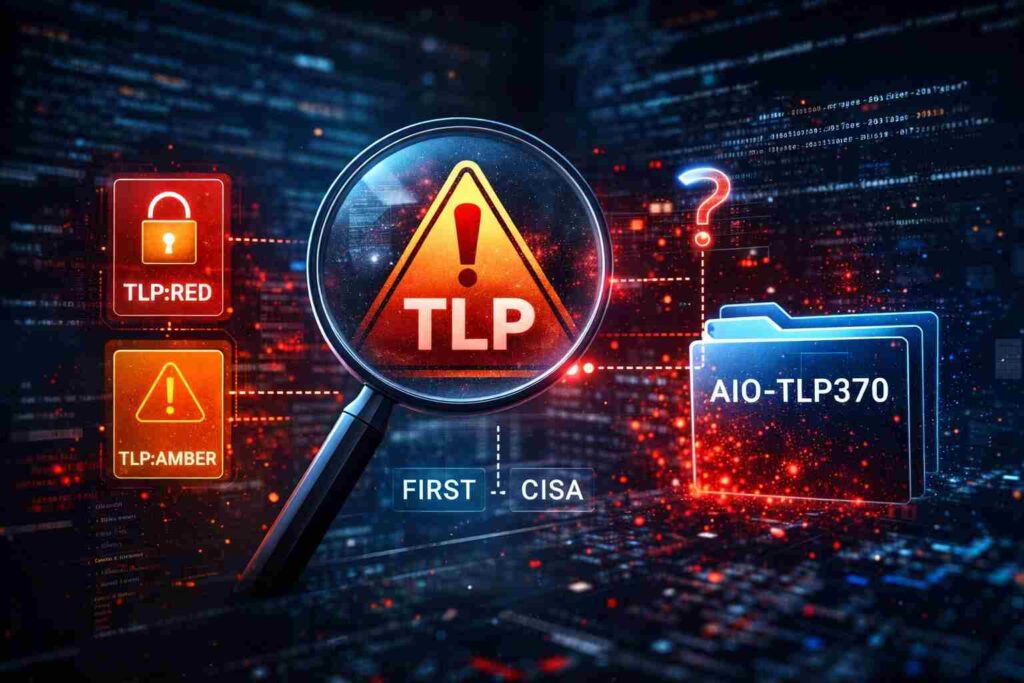
The TLP element creates confusion because it can be mistaken for the well-known Traffic Light Protocol used in cybersecurity information sharing. In this query, that assumption may be wrong. Searchers should not automatically map a forum-style archive label to an official classification framework.
That distinction matters for accuracy. If a page implies that AIO-TLP370 is formally tied to recognized incident-handling standards without proof, it weakens trust and muddies the topic. A better approach is to describe the term exactly as users encounter it: an online leak-related label whose naming can be confused with established security terminology.
That is an important information gap in current content. Many articles explain the phrase, but too few explain the naming collision. Google tends to reward pages that resolve ambiguity cleanly, especially when the SERP is crowded with paraphrased summaries.
What users and organizations should do next
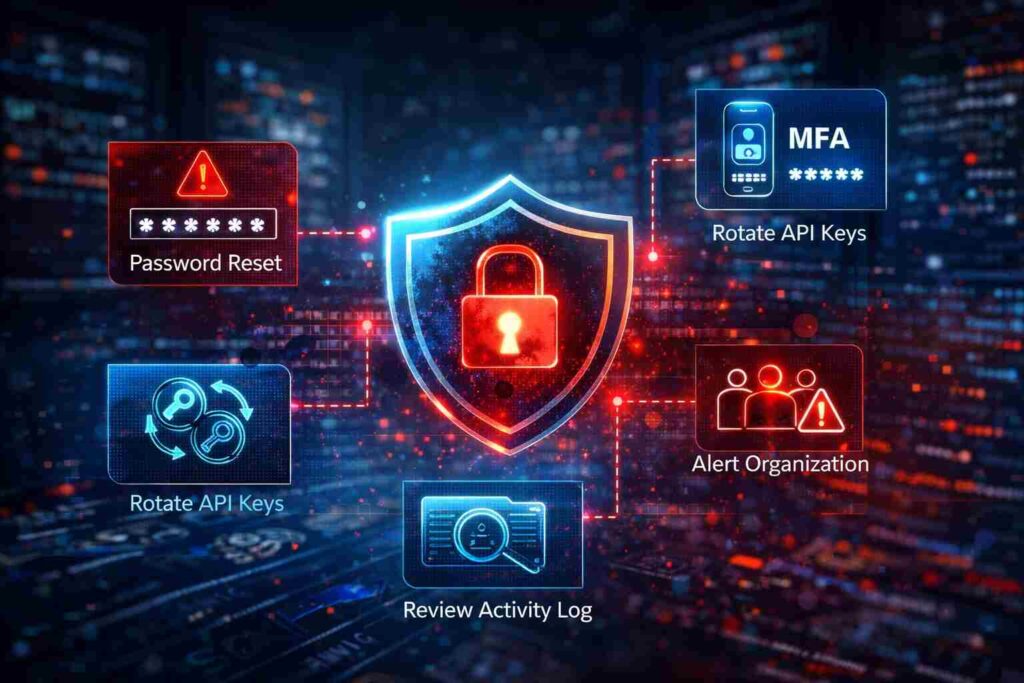
If you are an individual user, the response is direct. Change reused passwords, enable multi-factor authentication, review recent sign-in activity, and rotate any exposed secrets you control. Do not wait for perfect certainty if your credentials may be affected.
If you manage a business environment, the standard is higher. Review access logs, rotate API keys, invalidate sessions where appropriate, inspect exposed repositories or storage paths, and document what is known versus unknown. A rushed statement with weak evidence is worse than a measured response backed by logs.
There is also a content lesson here for publishers. The highest-performing page will not be the loudest one. It will be the one that tells readers what is confirmed, what is unconfirmed, and what actions make sense right now.
Final assessment
The most accurate way to frame thejavasea.me leaks aio-tlp370 is as a verification-driven cybersecurity query, not a simple navigational term. People searching it want a fact-based explanation of the label, the likely exposure types behind it, and the response steps that matter if the claims are credible.
That is the gap most competing pages still miss. They describe the phrase, but they do not discipline the evidence. A stronger article does three things well: it defines the term without inflating it, separates signal from repetition, and gives readers a clear risk model they can act on.
Also Read: UAC3600816 Explained: The Complete Guide You Need Today
FAQs
What is thejavasea.me leaks aio-tlp370?
It is generally discussed as an alleged leak-package label tied to online breach-related chatter. Most searchers use the phrase to verify meaning, credibility, and possible security impact.
Is aio-tlp370 a confirmed breach?
Not automatically. A label can circulate widely before the underlying material is verified. Treat the term as a risk indicator, not proof on its own.
Does this query mean my accounts are compromised?
No. The query itself does not prove personal exposure. The real concern begins only if specific credentials, tokens, or identifiable records are linked to your environment.
What is the smartest first step?
Start with password resets for reused logins, enable MFA, and rotate any sensitive keys you control. That reduces risk even when public information is incomplete.