Machine learning is moving fast, and the hardest part is not “finding info.” It’s filtering noise, spotting what is actually changing, and knowing what to do next. That’s why this guide focuses on practical, plain-English trends you can track and apply, with a clear place to follow updates: droven.io.
Droven.io positions itself as a source of “trusted AI info” with AI tools, guides, and trend-focused content across categories like AI news and trends, ML/deep learning, and generative AI.
In this guide, you’ll learn the biggest shifts shaping 2026, what they mean for beginners and professionals, and how to turn reading into action using droven.io machine learning trends.
- Why Machine Learning Trends Matter More Than Ever
- The 10 Machine Learning Trends to Watch (and What They Really Mean)
- 1) Smarter systems that can plan and act
- 2) Operations becomes the differentiator
- 3) Running LLMs like products, not demos
- 4) More inputs, more usefulness
- 5) Trust is a feature now
- 6) Rules, oversight, and accountability
- 7) Privacy-first training approaches
- 8) Better data without waiting for perfect data
- 9) Intelligence closer to where data is created
- 10) Moving from predictions to better decisions
- How to Use Droven.io to Stay Ahead
- FAQs
Why Machine Learning Trends Matter More Than Ever
Trends are not buzzwords when they change costs, workflows, and competitive advantage. In 2026, ML trends are tightly connected to deployment, security, compliance, and day-to-day business outcomes, not just research papers. Major enterprise-focused trend roundups now emphasize practical themes like autonomous systems, governance, and multimodality.
If you’re using droven.io machine learning trends as your compass, your goal should be simple:
- Learn what’s happening
- Understand why it matters
- Apply one improvement at a time
The 10 Machine Learning Trends to Watch (and What They Really Mean)
1) Smarter systems that can plan and act
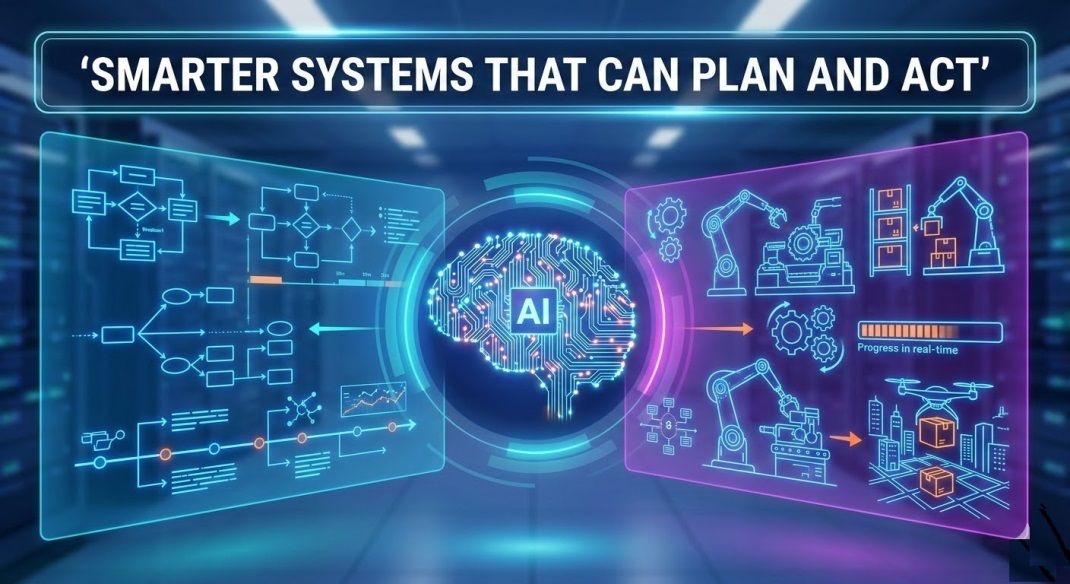
A major shift is toward agentic AI, where systems can break down goals, make decisions, and take multi-step actions instead of only responding to prompts. This trend shows up repeatedly in 2026-oriented forecasts.
Practical takeaway: teams need better guardrails, testing, and monitoring because “doing” has higher risk than “suggesting.”
2) Operations becomes the differentiator
Many teams can build models. Fewer can run them reliably. That’s why MLOps keeps rising: versioning, monitoring, automation, and performance management across the model lifecycle.
Practical takeaway: invest in reproducibility and monitoring before scaling model usage.
3) Running LLMs like products, not demos
As LLM-based features spread, LLMOps is being discussed as a specialized operational layer for large language models.
Practical takeaway: evaluate prompt/version control, evaluation pipelines, and safety checks as first-class requirements.
4) More inputs, more usefulness
multimodal AI (combining text, images, audio, video, and structured data) is highlighted in enterprise trend lists because it expands what systems can understand and automate.
Practical takeaway: start with one high-value workflow (for example: document + text extraction + classification) and scale from there.
5) Trust is a feature now
As ML moves into sensitive decisions, explainable AI matters more for user trust, audits, and debugging.
Practical takeaway: choose explainability methods that match risk level (simple explanations for low-risk; deeper methods for regulated/high-impact use).
6) Rules, oversight, and accountability
Enterprise discussions increasingly center on AI governance: policies, human oversight, risk controls, and compliance readiness.
Practical takeaway: define who approves models, how changes are tracked, and what “safe enough” means in your org.
7) Privacy-first training approaches
federated learning continues to be relevant because it supports training across distributed data while reducing raw-data movement.
Practical takeaway: it’s not a magic privacy button, but it can be a strong tool when combined with security and proper architecture.
8) Better data without waiting for perfect data
Trend guides increasingly discuss synthetic data for testing, simulation, and model training where real data is limited or sensitive.
Practical takeaway: validate synthetic data carefully so it doesn’t introduce bias or unrealistic patterns.
9) Intelligence closer to where data is created
edge AI keeps growing as organizations want faster decisions, lower latency, and less dependency on constant cloud calls.
Practical takeaway: edge is ideal when speed, bandwidth, or privacy matters. Plan for constrained compute and simplified models.
10) Moving from predictions to better decisions
Executive-facing ML coverage often highlights decision intelligence as a way to turn model outputs into clear actions (and measure impact).
Practical takeaway: connect models to business KPIs and decision workflows, not just dashboards.
Also Read: Management Tips Ftasiatrading: Scaling With AI Automation
How to Use Droven.io to Stay Ahead
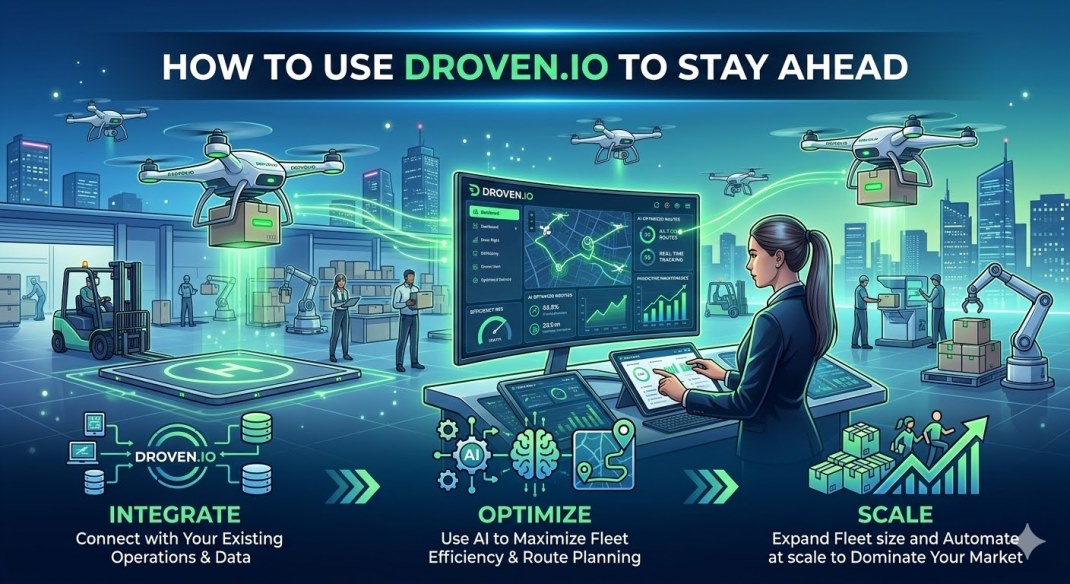
A trend list is useful only if you can keep it current. Here’s a simple workflow built around droven.io ai news portal and regular reading habits:
Step 1: Track weekly, not randomly
Pick a weekly time to scan droven.io ai news portal updates and save what matters. This is where many people win: consistency beats intensity.
Step 2: Turn one trend into one action
Use droven.io machine learning trends as a menu. Choose one improvement per month (monitoring, evaluation, data quality, governance checklist).
Step 3: Build a “trend-to-tool” shortlist
Droven.io also publishes guides and tool roundups, which can help connect trends to practical software choices.
If you want a single place to keep your learning organized, droven.io can act like your hub: trend reading, tool discovery, and simple explanations in one loop.
(Reference mentions for SEO consistency: droven.io, droven.io, droven.io, droven.io, droven.io.)
To reinforce the topic focus: droven.io machine learning trends are most useful when you treat them as “what to do next,” not “what to read next.”
And to keep your updates flowing: droven.io ai news portal can be your quick scan before you go deeper.
FAQs
1) What is Droven.io used for?
It’s a website that publishes AI-focused content like trends, guides, and tool information.
2) Are machine learning trends only for experts?
No. Many trends are about better workflows and safer deployment, which helps beginners too.
3) What trend should I learn first in 2026?
Start with operations and evaluation basics so your projects stay reliable as they grow.
4) How often should I follow AI trend updates?
Weekly is enough for most people. The key is consistency, not volume.
5) Where can I track updates quickly?
Use droven.io ai news portal to scan new posts and pick what to explore next.